








This week, (19–25 October 2026) we celebrate European Week for Safety and Health at Work. The aim of the European Week for Safety and Health at Work is to increase awareness of health and safety risks at work and how to prevent them. European Week for Safety and Health at Work encourages involving all staff in improving workplace safety and well-being.
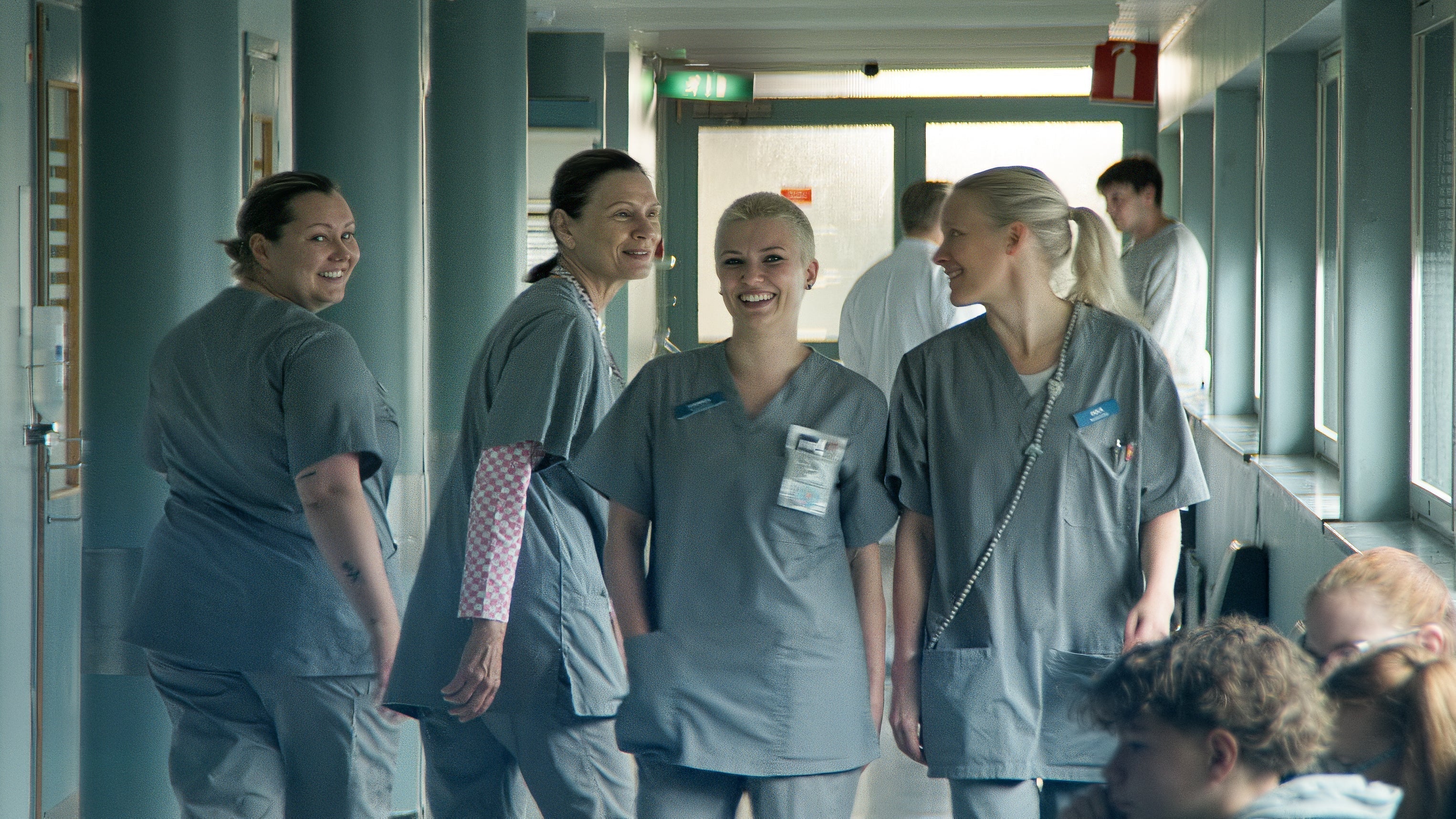
At Medanta, we look at occupational safety particularly from the perspective of workwear. Workwear accompanies the professional throughout the entire shift and is one of their work tools. Properly chosen workwear supports safe working, good hygiene and the employee's well-being.
Requirements for workwear vary depending on the work task, work environment and industry. In Finland, there is no single set of guidelines or legislation on workwear that applies to all industries. Instead, obligations regarding workwear arise from the Occupational Safety and Health Act, collective agreements, personal protective equipment regulations and industry-specific hygiene and safety requirements.
The employer is responsible for identifying hazards at work and assessing what type of clothing is required for safe working. Workwear must be suitable for both the employee and the requirements of the work task. It must allow for the movements required by the work and must not itself create a risk of accidents.
Workwear and protective clothing are not the same thing
Ordinary workwear is clothing specific to a profession or workplace, such as a nurse's work wear uniform, a chef's jacket or a cleaner's uniform. Its purpose is to support work, create a uniform appearance for staff and protect the employee's own clothes.
Protective clothing, on the other hand, is personal protective equipment designed to protect the user from identified hazards, such as chemicals, microbes, heat, cold or poor visibility. Protective clothing must meet requirements relevant to its intended use and can be identified by the CE marking, its protection classification and the standard defining the requirements for protective clothing, EN ISO 13688.
Ordinary workwear therefore does not replace the personal protective equipment required for the task. At the same time, workwear must work safely together with other protective equipment, such as protective gloves, aprons, respiratory protection and safety footwear.

The employer is responsible for the safety of workwear
The Occupational Safety and Health Act requires employers to identify hazards arising from work and the work environment. Hazards should primarily be eliminated through work methods, facilities and technical solutions. If this is not sufficient, the employer must provide employees with the necessary personal protective equipment.
The employer is responsible for:
- assessing the hazards and hygiene requirements associated with work tasks
- determining the workwear and personal protective equipment required
- ensuring that clothing is the correct size, fits properly and is comfortable to wear
- checking the compatibility of workwear and protective equipment
- ensuring that protective equipment is cleaned, maintained and replaced
- training employees in the correct use of clothing and protective equipment
- monitoring compliance with the instructions provided.
The employer may also set requirements for workwear that are more stringent than the minimum standards set by legislation and collective agreements. These may be based on risk assessments, self-monitoring, hygiene instructions, procurement contracts or the company's own quality objectives. These requirements may include, for example, a specific colour for workwear, a uniform washing temperature or resistance to industrial laundering. However, they may also be well justified by the needs of the workplace and risk assessments, provided they support hygiene, safety, quality and workwear management
Employees, in turn, must use the provided protective equipment in accordance with the instructions and dress in a way that does not create risks such as snagging, ignition or tripping.
Workwear in the health and social care sector emphasises the management of biological risks
The choice of workwear in healthcare is particularly influenced by hygiene, biological exposures and the potential risk of exposure to blood and other body fluids. Management of biological risks ensures the safety of employees as well as customers and patients. The employer must assess on a task-by-task basis when ordinary healthcare workwear is sufficient and when a protective apron, protective jacket or full protective clothing is also required
In procuring workwear for the health and social care sector, the entire care process must also be considered to ensure the microbiological cleanliness of the workwear. At least the following factors should be taken into account:
- How often is the workwear changed, and how does this affect the number of workwear items available?
- Where are dirty and clean clothes stored?
- How are the clothes transported for washing?
- How is washing and the quality of the washing monitored?
- Do the chosen workwear items retain their properties after repeated washing?
- Do the workwear items return microbiologically clean after washing?
Ordinary care worker's uniform is not automatically personal protective equipment. When certified protection against infection is required, the clothing must meet the requirements applicable to that hazard, such as the EN 14126 standard.
In the restaurant industry, workwear supports food and occupational safety
The Finnish Food Authority requires that employees working in registered food premises, such as cafes, commercial kitchens, bakeries or food shops, wear clean workwear, footwear and, where necessary, protective clothing suitable for their work. Workwear must be changed frequently enough to ensure that food safety is not compromised.
In the kitchen, workwear must be suitable for an environment combining heat, pace, sharp tools, hot liquids and wet floors. Restaurant industry workwear designs must allow for the movements required by the work. Workwear must not have parts that can easily snag on machinery or equipment. Ordinary chef's jackets are not automatically personal protective equipment protecting against heat or fire.
In customer service roles in restaurants, food hygiene requirements depend on whether the employee handles food. In other roles, clothing is guided by general risk assessments and the uniform specified by the employer.
In the cleaning industry, the work environment determines the clothing requirements
Cleaning industry tasks range from office and hotel cleaning to cleaning hospitals, food premises and industrial environments. Regulations on biological hazards also apply to cleaning and housekeeping work when employees may be exposed to microbes, body fluids or other biological agents. Such tasks require protective clothing appropriate to the risk, as well as clear instructions on handling soiled clothing.
In cleaning, the customer's own hygiene instructions guide the choice and care of workwear, for example, healthcare hygiene instructions are followed in hospital cleaning, while the requirements of the customer's own monitoring system apply to cleaning food premises.
The risks posed by cleaning and disinfectants must also be assessed in terms of the protection provided by workwear or personal protective equipment. The safety data sheets of the chemicals used state what protection is required when handling the substances. Strong or splash-hazardous chemicals may require certified chemical protective clothing in addition to ordinary workwear.
In the cleaning and housekeeping industry, workwear must be flexible and support good ergonomics when bending, reaching and performing repetitive movements. Breathable material helps manage heat stress during physical work. There must be enough pockets, and their placement should support work. Wet and slippery work environments must be particularly considered when choosing safety footwear.
In the food industry, clean workwear protects the product
Employees working in food processing areas and food premises, such as slaughterhouses, dairies or meat processing facilities, must have sufficient, suitable and clean workwear and protective clothing. Depending on the task and work environment, this includes at least workwear, headwear, safety footwear and protective gloves. Workwear and its cleanliness are also assessed during food safety inspections.
In the food industry, workwear must protect food from contamination, but it must also be safe for the employee. Hazards such as snagging on machinery, cuts, heat, cold, chemical splashes and poor visibility may occur at work. In these situations, risk assessments determine the necessary personal protective equipment.

In the service industry, different work tasks set requirements for workwear
There is no single common industry-specific workwear requirement in the service industry. At a hotel reception, in a shop or in another customer service role, workwear is generally ordinary professional clothing.
However, the work task may entail more specific requirements. In a hotel kitchen, food industry requirements are followed, and in floor cleaning, cleaning industry instructions apply. In warehouse, transport and outdoor work, visible, rain-protective or cold-resistant clothing may be required.
Clothing details also affect safety. Dangling cords, long hems or overly loose fits can create hazards in certain work environments or challenging customer situations.
The Finnish Retail Collective Agreement requires employers to provide workwear for shop assistants, warehouse workers and storekeepers. At service stations, employers are required to provide protective clothing and footwear for service technicians, car washers and platform cleaners.
Safe workwear procurement begins with understanding everyday work
Successful workwear procurement requires research and familiarity with the employees' work. First, it is important to understand where the clothing is used, what movements the work requires, what hazards occur in the work environment and how the clothing is washed and maintained. Workwear procurement is also an excellent way to involve employees in decision-making.
Medanta's workwear experts help identify the needs of work tasks, users and the work environment. We consider the functionality, fit, material, washing process and compatibility of the clothing with the necessary personal protective equipment. When workwear supports work, it improves not only safety but also comfort at work, professional pride and the uniform appearance of the entire organisation.
Do you need help planning your company's workwear? Contact us and let's develop a workwear solution together that meets your company's needs.