









High-quality materials, transparent processes and third-party audits ensure that every Medanta garment is durable and a truly responsible choice.
"We are a resistance for poor quality, boring professional textiles, leveling off, the grey everyday work life and greenwashing."
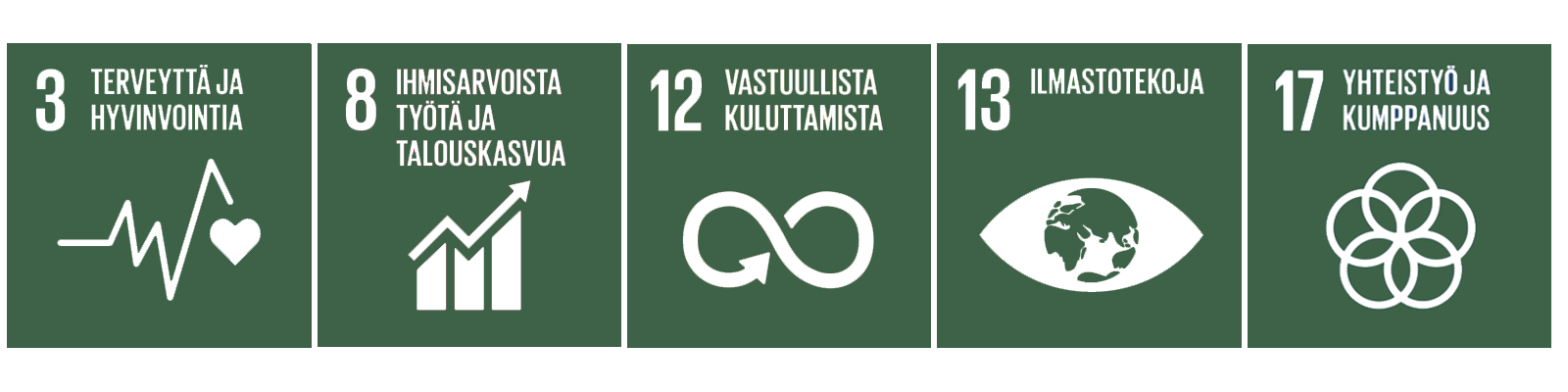
We have chosen the following goals from the UN Sustainable Development Goals:
Sustainability is actions.
Long-lasting, high-quality workwear
We believe that quality is the best act of responsibility. Our workwear is designed for professional use – to withstand wear and tear and to withstand institutional washing.
150 washes and a lifespan of over 8 years - that's how durable our workwear is.
100% of the polyester we use is recycled. We are constantly researching and testing new bio-based fibers. Our latest innovation is Medanta Biopique, which utilizes Sorona fiber.
A pioneer in textile safety
The antimicrobial treatment of our workwear increases occupational safety.
99% of microbes are killed within 24 hours of contamination of clothes in our antimicrobial fabrics. The antimicrobial efficacy has been tested using the SFS-EN ISO 20743 method under laboratory conditions.
Transparent production and logistics
We always produce according to need and
we minimize the share of storage.
With an efficient cutting plan, we prevent material waste,
We operate cost-effectively and minimize the amount of waste.
We have minimized air freight and optimized domestic and international transportation. We handle
domestic and European transport with vehicles running on biodiesel.
In 2024, we reduced air freight by 18% compared to the previous year.
Garment care & lifecycle
Sustainable development covers the entire life cycle of a textile – from the design desk to the use phase and maintenance.
Workwear care is our specialty. Optimal textile care extends the life of the products.
Our laundries have the SFS-EN 14065:2016 certificate and our laundry operations meet the requirements of the Textile Care Act.
The requirements of the RABC for Laundries and the quality assurance of the washing process guidelines submitted by the Hygiene Committee.
When textiles have reached the end of their life cycle, we recycle them into recycled fiber.
We believe that quality is the best act of responsibility. Our workwear is designed for professional use – to withstand wear and tear and to withstand institutional washing.
150 washes and a lifespan of over 8 years - that's how durable our workwear is.
100% of the polyester we use is recycled. We are constantly researching and testing new bio-based fibers. Our latest innovation is Medanta Biopique, which utilizes Sorona fiber.
The antimicrobial treatment of our workwear increases occupational safety.
99% of microbes are killed within 24 hours of contamination of clothes in our antimicrobial fabrics. The antimicrobial efficacy has been tested using the SFS-EN ISO 20743 method under laboratory conditions.
We always produce according to need and
we minimize the share of storage.
With an efficient cutting plan, we prevent material waste,
We operate cost-effectively and minimize the amount of waste.
We have minimized air freight and optimized domestic and international transportation. We handle
domestic and European transport with vehicles running on biodiesel.
In 2024, we reduced air freight by 18% compared to the previous year.
Sustainable development covers the entire life cycle of a textile – from the design desk to the use phase and maintenance.
Workwear care is our specialty. Optimal textile care extends the life of the products.
Our laundries have the SFS-EN 14065:2016 certificate and our laundry operations meet the requirements of the Textile Care Act.
The requirements of the RABC for Laundries and the quality assurance of the washing process guidelines submitted by the Hygiene Committee.
When textiles have reached the end of their life cycle, we recycle them into recycled fiber.
324,063 m
of fabric was consumed in our factories in 2024.
231,474
A single garment was completed in 2024.
2030
All the fabrics we use are bio-based and made from recycled raw materials.
"We believe in transparency and therefore quality control is always carried out by a third, independent party."
Transparent supply chain – audited and verified.
The factories used by Medanta are certified (ISO 9001) to quality standards and have undergone ISO14000 series environmental audits and inspections.
All factories used by Medanta have the Öko Tex standard.
We require all our partner factories and subcontractors to adhere to our Supplier Code of Conduct. We have clearly outlined our common operating principles and ensure that they are known to everyone and part of everyday life. The factories also sign Medanta's principles of good cooperation and business conduct.
For us, social responsibility means that we require factories in the supply chain to ensure gender equality, fair wages, occupational safety and respect for individual rights in accordance with the goals of the International Labor Organization (ILO )'s fundamental rights at work.
We are committed to the Business Social Compliance Initiative (BSCI) principles. The BSCI principles guarantee, among other things, fair pay, reasonable working hours, permanent employment, the right to organize and occupational safety. Child labor, forced labor, discrimination and other inhumane treatment are prohibited.

Made with care, fairly executed, proudly carried.
Workwear with a conscience
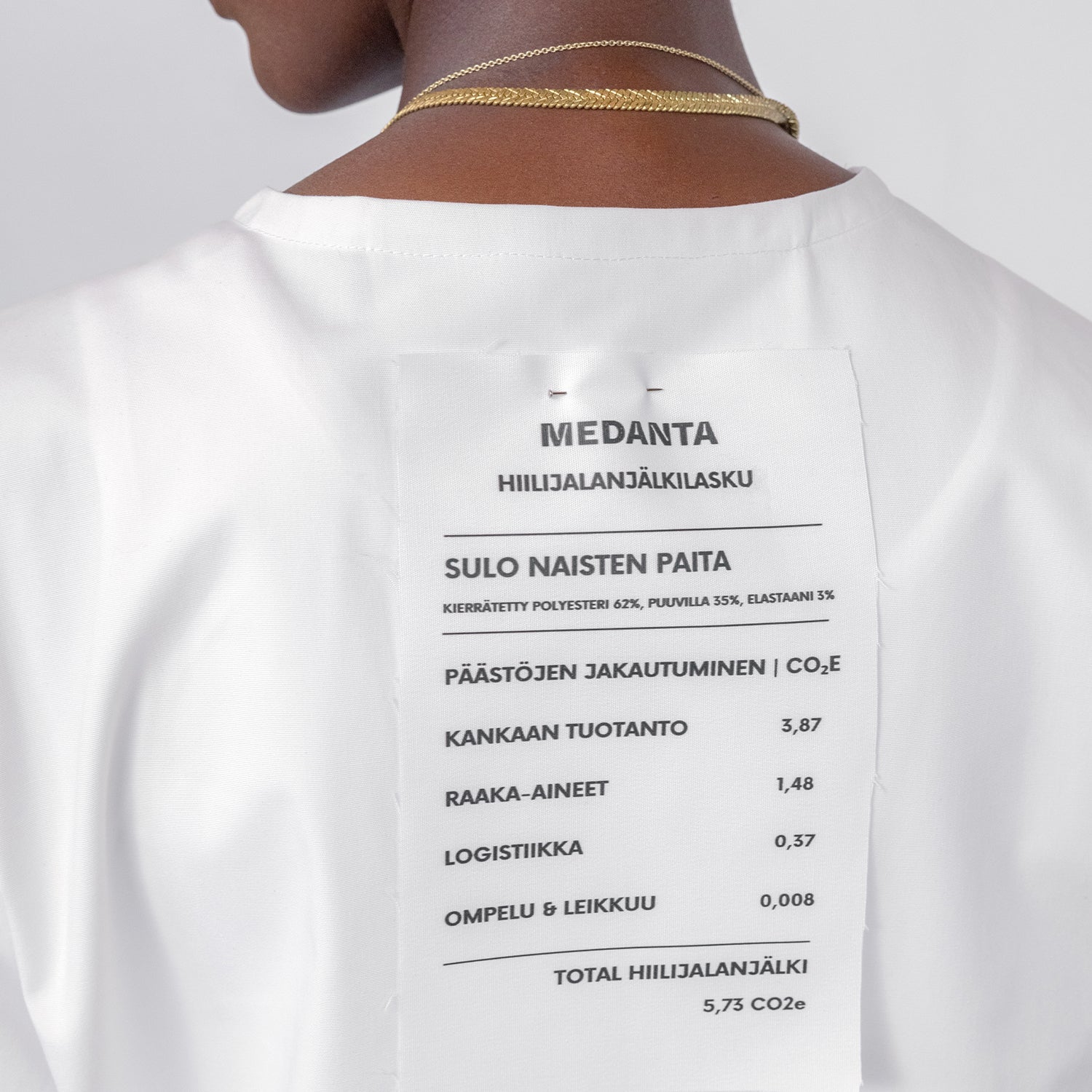
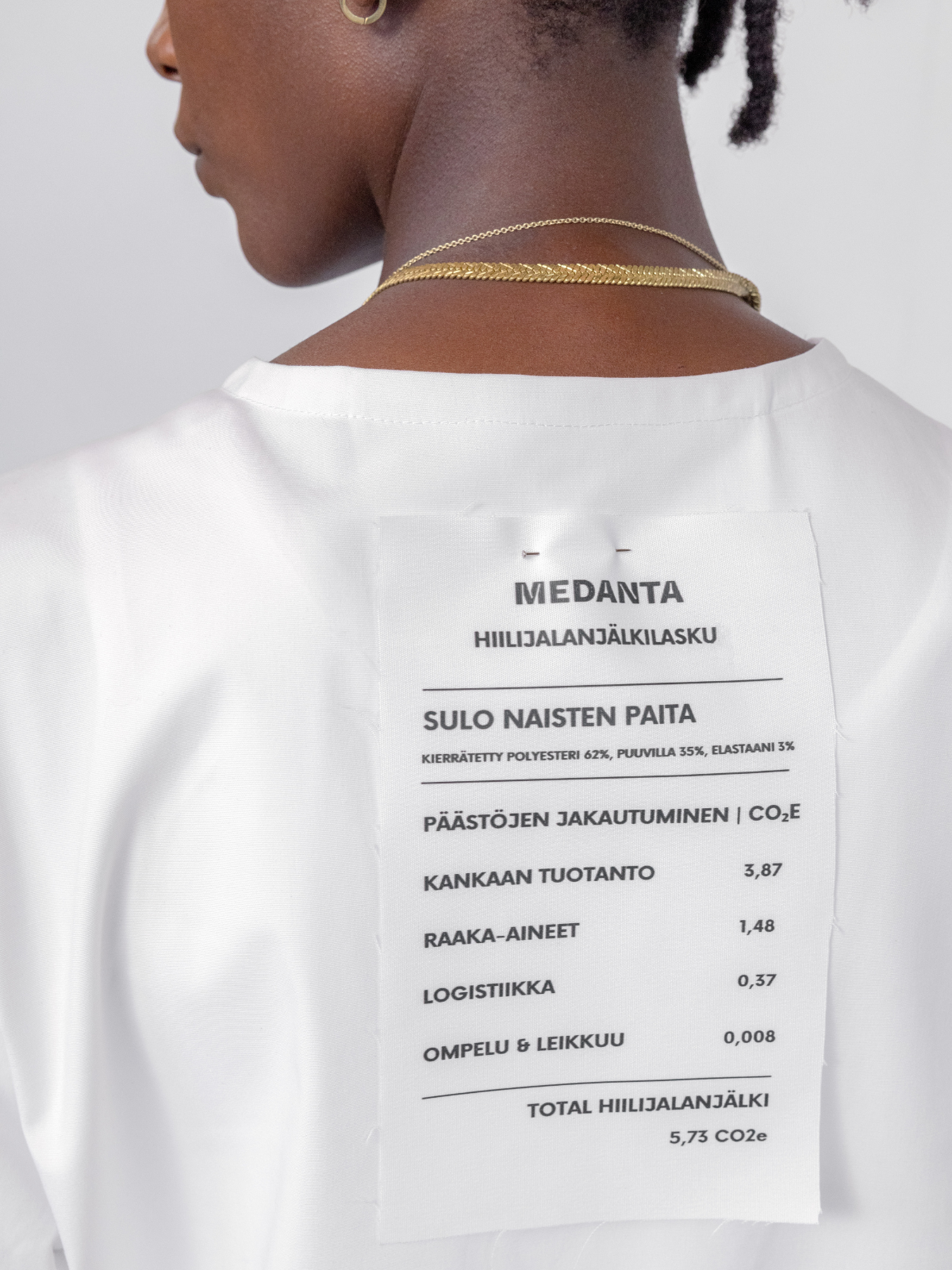
In collaboration with Infine Oy , we started calculating the carbon footprint of our products in 2024. Through this project, we have developed a calculator that will help us calculate the carbon footprint of all our products in the future.
The carbon footprint of a polyester shirt varies depending on the amount of material, manufacturing methods and country of manufacture, and is usually around 5–10 kg CO2e. Our Sulo shirt, made from Medanta Flex fabric, has the lowest carbon footprint.
How do we reduce waste?
- We produce garments and the materials used in them only according to actual demand.
- Our production is designed to minimize the generation of chemical pollutants.
- Through efficient cutting plans, we prevent material waste, operate cost-effectively, and minimize the amount of waste generated.
- We ship our products in reusable and recyclable packaging. The carbon emissions generated over the entire lifecycle of our e-commerce packaging are offset by planting trees in Finland.
- We offer our customers the opportunity to recycle end-of-life textiles through Rester Oy.

Discover Medanta's sustainability magazine
In the first issue of Medanta Magazine, we have compiled ideas, achievements and goals that, together with our customers, will lead us towards a more sustainable future.

Medanta starts business.
Medanta's founders Anu Kivelä and Taina Steiner share a strong belief in the power of Finnish fashion design. It was clear from the beginning that the revolution in responsible professional fashion had to start with new materials that would revolutionize the industry, because the desired ones did not exist. Medanta begins to develop new types of workwear for healthcare professionals.

Medanta Flex material
Medanta's first material is Medanta Flex, a strong, plain bandage whose flexibility, fit and support are due to the elastane in the bandage as a single strand. The fabric brings a new level of comfort, breathability and color to healthcare professionals' clothing. Two shirts and two pairs of pants will initially be designed from the material.

The use of recycled polyester is being tested
The use of recycled polyester is still new in 2014. The introduction of a new material requires a lot of testing and research to ensure its durability and functionality in workwear.
Proprietary antimicrobial fabric
Medanta launches a revolutionary material innovation: antimicrobial fabric. The antimicrobial treatment applied to the fabric during the dyeing process stops the growth of microbes and kills them.
Responsible maintenance process
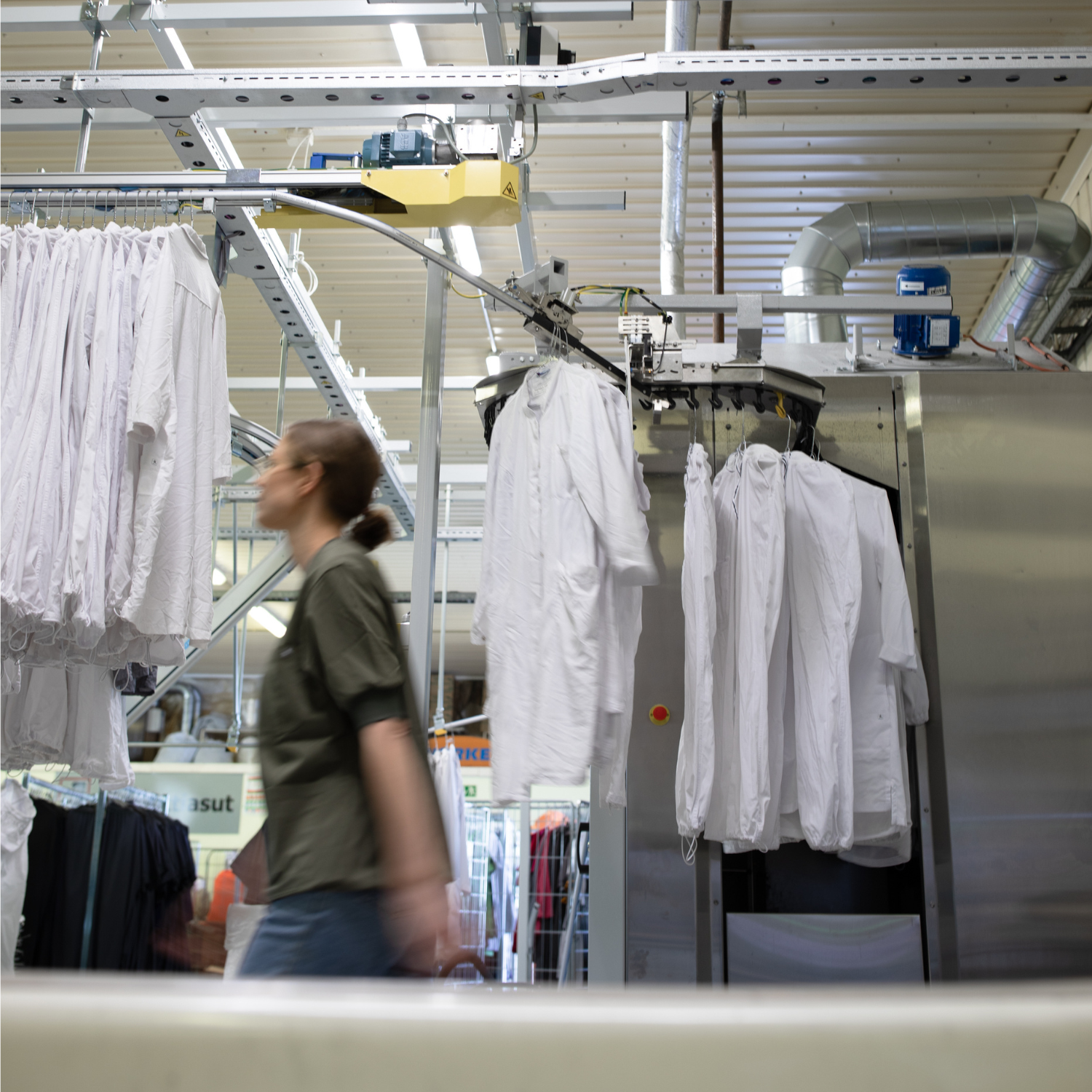
Medanta is developing a comprehensive service for workwear, which includes not only the clothes but also a responsible maintenance process: washing, maintenance, storage and logistics. With its own laundry service, RFID technology and clothing life cycle calculation, important information is obtained on how many industrial washes workwear can withstand with optimal maintenance. If necessary, corporate textiles can also be sent for recycling through Medanta's laundry.

All polyester used is recycled.
Medanta's recycled polyester is now made from plastic bottles. Recycled polyester is strong and adds strength to the material. It retains its shape and color well, does not shrink and is easy to care for. It is also a hydrophobic fiber, which repels water and therefore dries very quickly.

Covid-19 pandemic affects development work
Medanta is testing more antimicrobial treatments and bringing much-needed protective textiles and equipment to its customers. Medanta is developing an antimicrobial respirator for healthcare professionals together with a customer. The mask is also of interest to the sports world, and is seen on the face of formula driver Valtteri Bottas, among others. Medanta is also supplying millions of disposable respirators to Finns.

Technical Medanta Smart Collection
Medanta combines technical features familiar from sportswear with workwear. The new smart Smartsport and Heavysmart materials are easy to care for, flexible and comfortable. They are used in the new Medanta Smart collection.

Corn-based fiber for use
Medanta is introducing Sorona fiber, a bio-based fiber derived from food production surpluses. The flexible Sorona replaces, among other things, the use of oil-based elastane and polyester. Medanta is developing Medanta Biopique knitwear containing Sorona, which is flexible, breathable, smooth and durable.
Carbon footprint calculator launched
Medanta is launching a comprehensive and accurate data-based carbon footprint calculation in collaboration with Infine Oy. With the help of the calculator created by Infine, Medanta will be able to calculate the carbon footprint of all its products. Reliable sustainability measures reduce risks, generate savings and strengthen customer trust, brand reputation and value.

Innovation work continues
New, sustainable material innovations, such as fully bio-based fibers, are continuously researched and tested with partners. The use of conventional cotton is minimized. Artificial intelligence is utilized, for example, at the Medanta factory, where automatic cutters ensure that fabric waste is minimized.